This note explains how that works, what the numbers in the repository say as of October 2026, and how you can follow along or join in.
Key takeaways
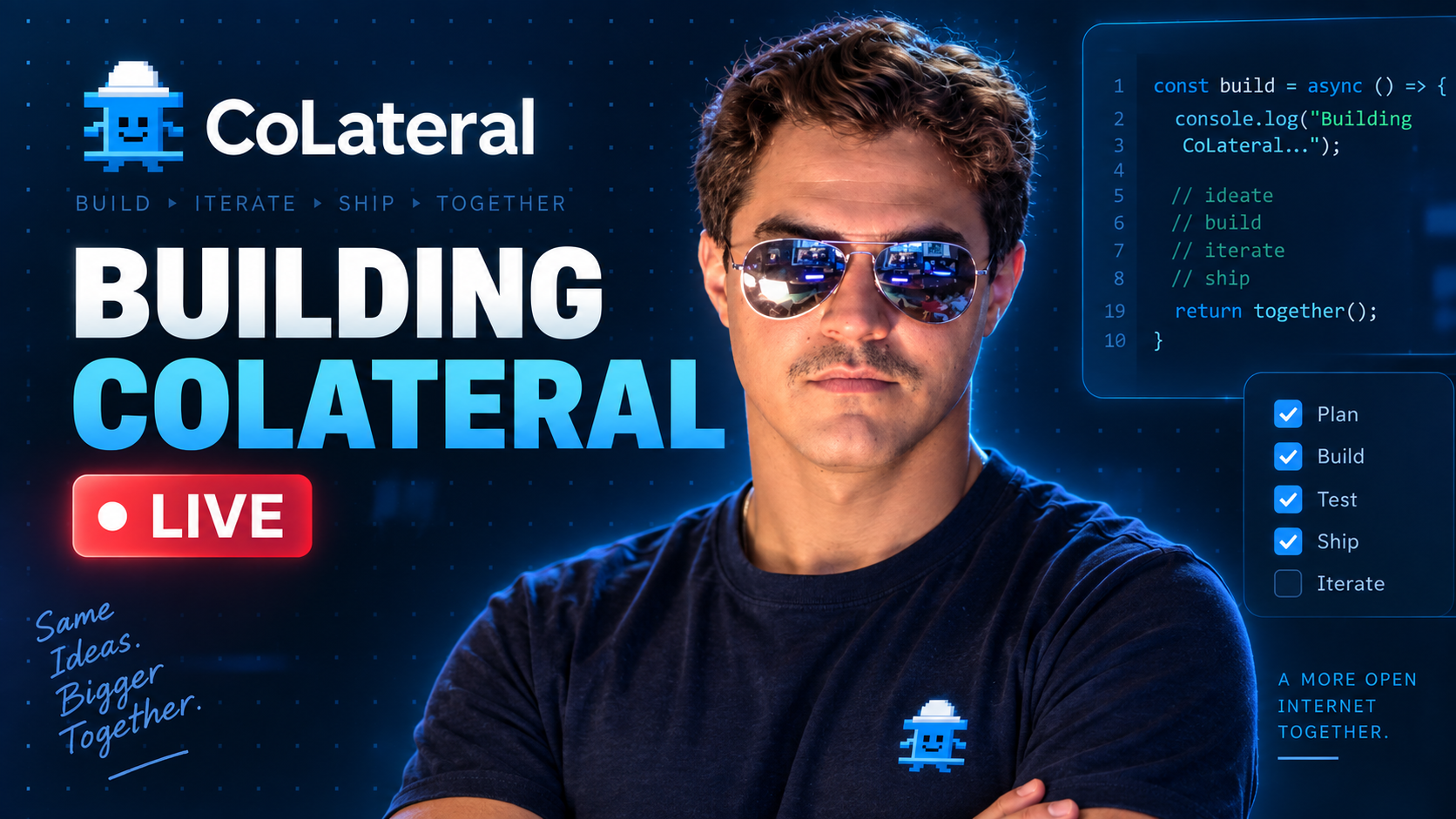
- CoLateral, the all-in-one agentic desktop workspace, is built in public by its founder Nic Vandewetering through a day-numbered livestream series on YouTube and posts on X at @nvandewetering.
- As of 7 October 2026 the CoLateral repository holds 6,227 commits on its main branch, with commits on 130 different days, and 48 version tags from v1.0.1 (2026-08-02) to v1.0.70 (2026-10-05).
- CoLateral ships small and often: its release notes are written in the words a user would use, and the desktop updater shows them behind a "What's new" button.
- Building CoLateral in public means the process, the livestreams and the release notes are public; the CoLateral source repository itself is private.
- Anyone can follow the CoLateral build on YouTube, X, LinkedIn or Instagram, and can join the CoLateral community on Discord for support, updates and discussion.
Why is CoLateral built in public?
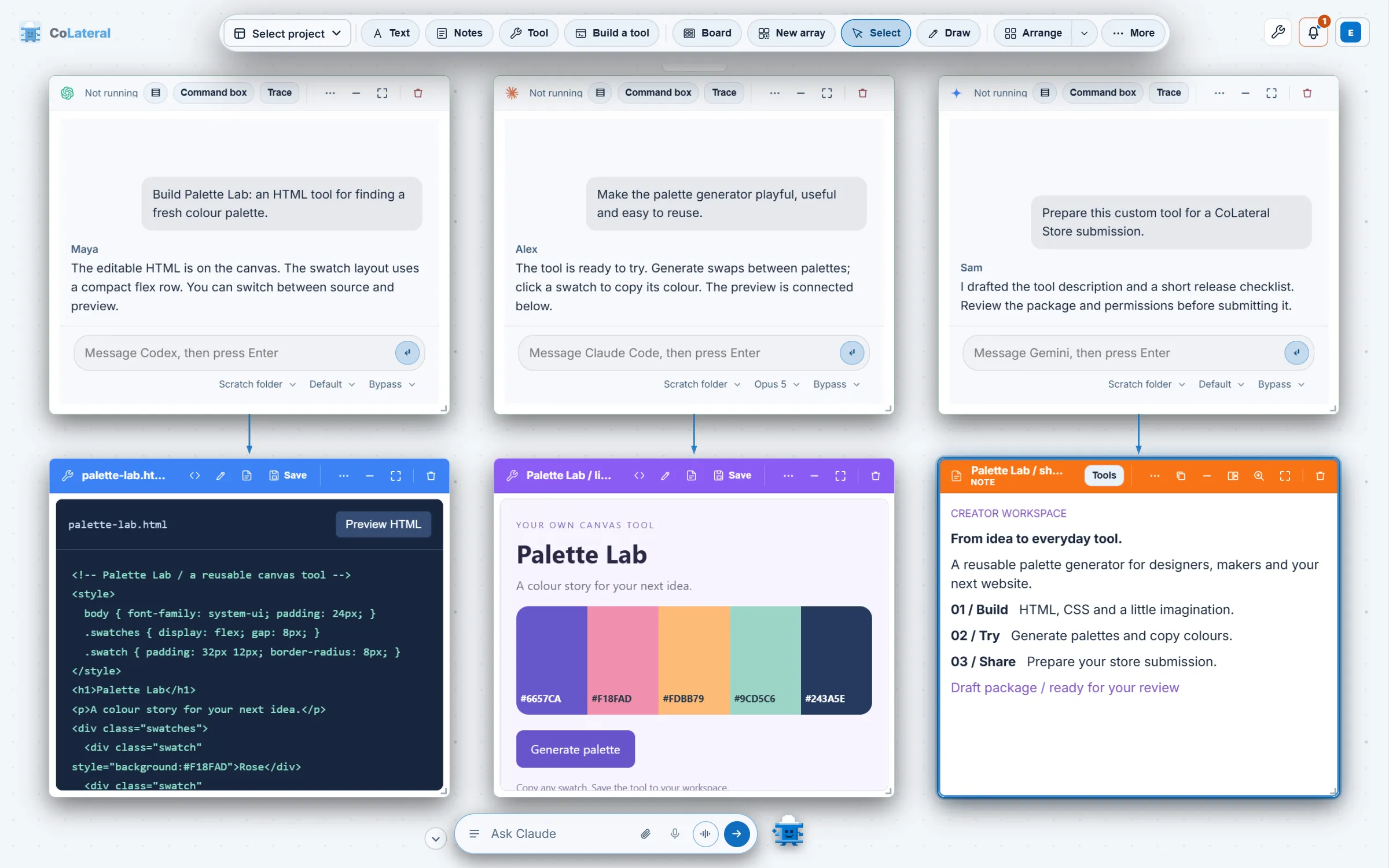
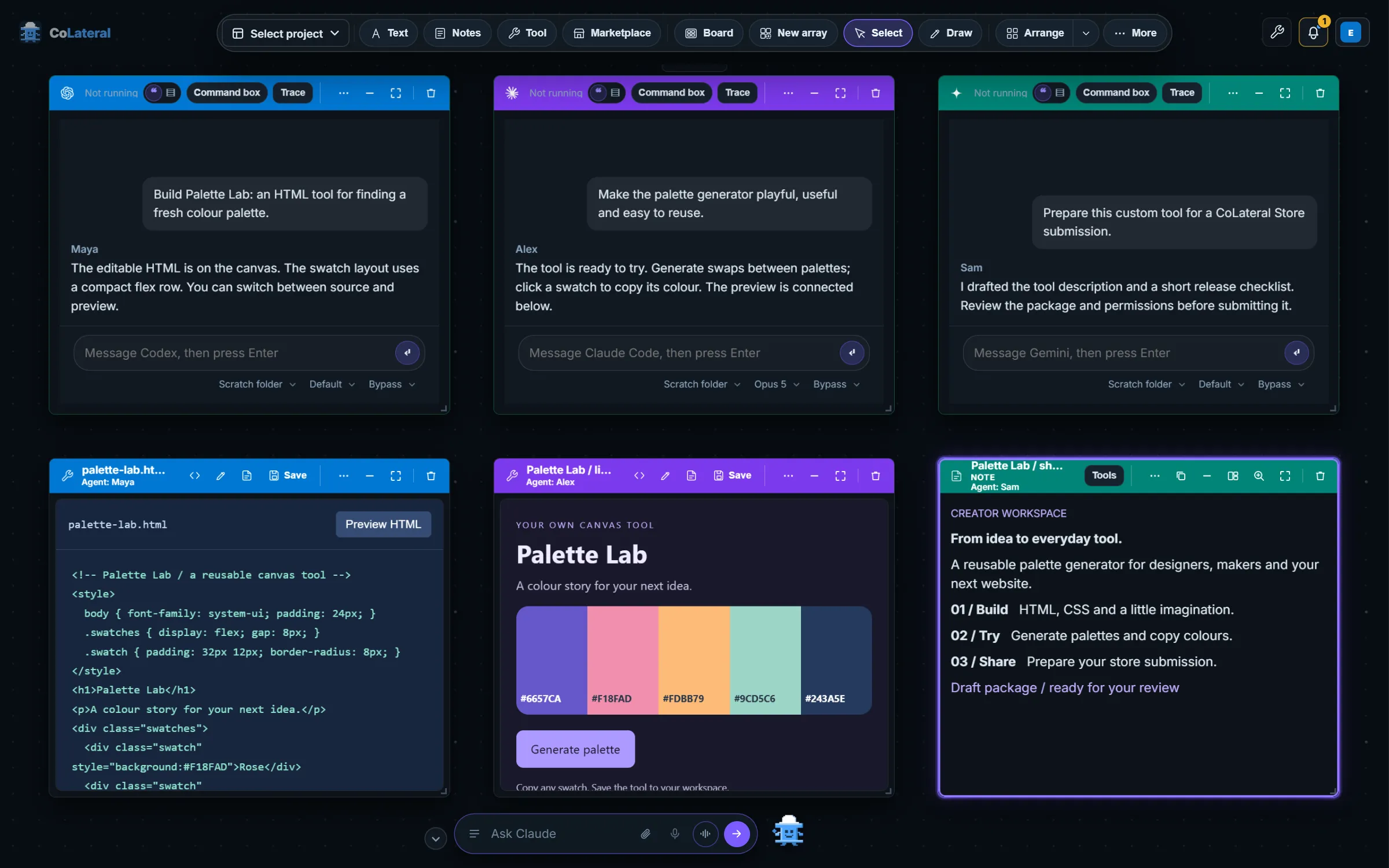
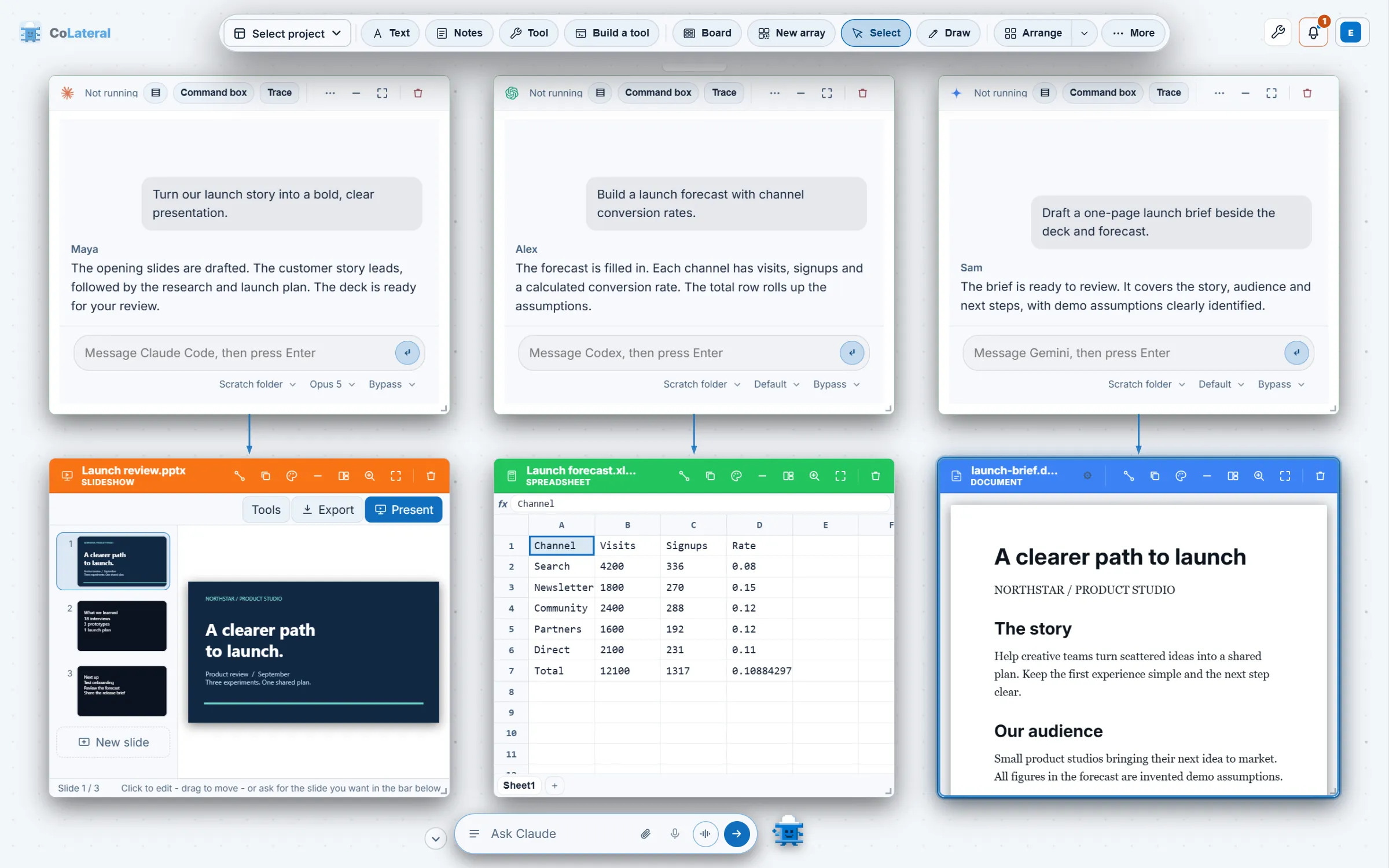
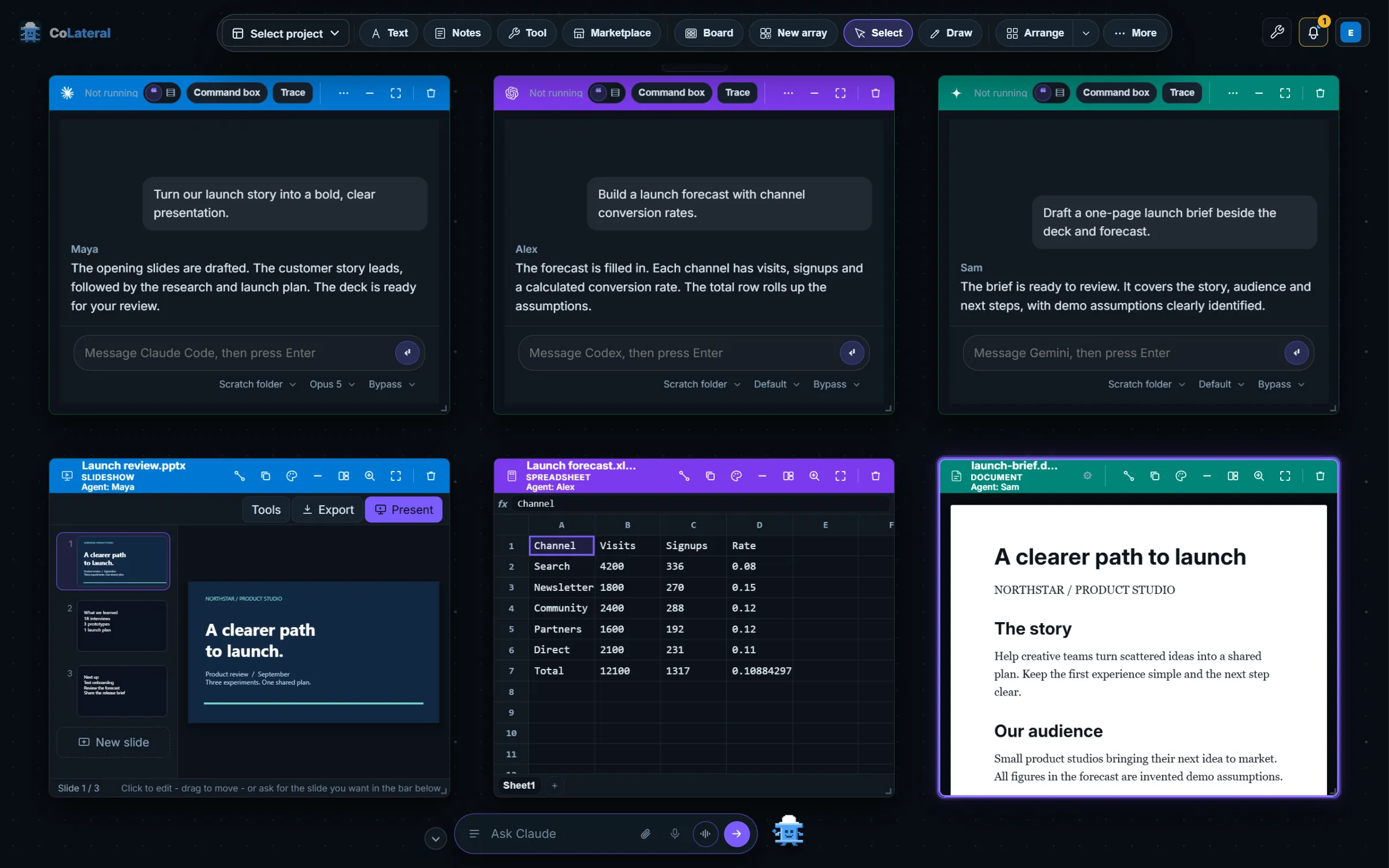
The short answer is on the About page, in its own words: "Follow a build session, see what is being refined and bring your own ideas to the conversation." CoLateral is a workspace where files, notes, tools, terminals and AI coding agents share one canvas, and a product like that changes every week. I would rather the people who might use it can see the changes as they happen than read about them afterwards.
There is a record in the repository that shows this working. On 2026-08-03 the commit that cut desktop version 1.0.4 is titled "Cut 1.0.4 with the beta tester's fixes in it". That commit shows an early release carrying fixes that came from someone using the app, and the livestreams, X posts and Discord are how I keep that loop open.
What do the CoLateral livestreams show?
The livestreams are a day-numbered series on my YouTube channel. The series is titled "Vibe Coding Until I Can Move Out of My Mom's Basement", and I will leave the title to explain its own premise. For me, vibe coding here means directing AI coding agents to build CoLateral, which is also how the repository itself is organised (see how CoLateral is built with AI coding agents).
The site's own livestream list currently runs from Day 50 to Day 55, and these videos were added to the site on 2026-09-08. Here are three of them. I am describing each only by its title, so watch the video for what actually happens in it. The full YouTube titles also carry a running revenue figure, which I have left out of the titles below on purpose: it belongs to the stream, not to the facts of this blog.
 Watch on YouTubeVibe Coding Until I Can Move Out of My Mom's Basement - Day 50
 Watch on YouTubeVibe Coding Until I Can Move Out of My Mom's Basement - Day 53
 Watch on YouTubeVibe Coding Until I Can Move Out of My Mom's Basement - Day 55
The livestreams also appear on the site itself. The home page carries a livestream carousel (added 2026-09-14), and the About page shows the latest session. The full archive is always on the streams page.
How often does CoLateral ship?
Often, and in small pieces. These are the figures from the repository as of 7 October 2026. They measure activity, not quality, and a large share of those commits were made with AI coding agents, a story I tell in the agents post.
- commits on main since 2025-09-29
- 6,227
- days with at least one commit
- 130
- version tags, v1.0.1 to v1.0.70
- 48
- test files in the tests folder
- 1,498
Two honest notes on those numbers. First, the repository's first two commits are dated 2025-09-29, but the steady history begins in May 2026, so the month-by-month table below starts there. Second, 48 tags do not mean 48 releases: the version numbers run to 1.0.70, and not every number has a tag in this repository.
| Month | Commits on main | Version tags (by commit date) |
|---|---|---|
| May 2026 | 266 | 0 |
| June 2026 | 1,330 | 0 |
| July 2026 | 1,266 | 0 |
| August 2026 | 1,021 | 17 |
| September 2026 | 2,079 | 30 |
| October 2026 (to the 7th) | 263 | 1 |
The first version tag, v1.0.1, is dated 2026-08-02. In the stretch from 2026-09-24 to 2026-10-03, commits titled as releases cover versions 1.0.63 through 1.0.69, which is several versions in about ten days. I would rather ship a fix the day I have it than hold it for a bigger release. For the version-by-version detail, see the 2026 release notes, or download the desktop app and use the "What's new" button after an update.
First commit
The repository's first commit is dated 2025-09-29.
First version tag
v1.0.1 is the first version tag in the repository.
A beta tester's fixes ship
The commit that cuts 1.0.4 is titled "Cut 1.0.4 with the beta tester's fixes in it".
Livestreams join the site
The commit "Add founder livestreams and interactive website demos" adds the livestream list the site uses.
Livestreams on the home page
The home page shows the founder livestreams under the product reel.
Version tag v1.0.70
The newest version tag in the repository at the time of writing.
For the longer story of how CoLateral got here, read the history of CoLateral, and for what the product looked like along the way, the visual history.
How does a CoLateral update get from the repository to my desktop?
The repository's money-path notes put it in one sentence: desktop updates ship through a releases repository on GitHub and through colateralai.com/latest.json, and that is what an installed copy reads. In practice the app checks for updates and offers "Install and restart", and you can also choose "Check for updates" yourself. The FAQ asks you to save your work before installing, and I would repeat that here.
That path is why small releases make sense to me. Each version is a signed set of installers for Windows, macOS and Linux, the notes travel with it, and an installed copy picks it up without anyone reinstalling by hand. The less each release changes, the easier it is to say what changed.
Is CoLateral open source?
No. Building in public is not the same as publishing source code, and I do not want to blur the two. The CoLateral source repository is private. What is public is the process: the livestreams, the posts on X, the release notes the updater shows and this blog. The numbers in this note come from that private repository, and I have quoted only counts and dates I can check against it.
The release notes follow a rule written in the repository: they are "the text the updater shows", written in the words a user would use rather than as a list of commits. That is the formal half of building in public. The livestream is the informal half.
How do I follow along and join the CoLateral community?
Everything below is linked from the About page, so you can confirm each link there.
- YouTube: the livestream archive holds every build session.
- Discord: join the community for customer support, updates and community.
- X: @nvandewetering is where the short version of the build goes.
- LinkedIn: Nic Vandewetering.
- Email: questions and ideas go to support@colateral.engineering, as the About page says.
If you want to try the product rather than watch it, the download page has the Windows, macOS and Linux installers, and pricing explains the licence. CoLateral is bought once; I wrote about the reasons in why CoLateral is a one-time licence.
What does building in public cost, and what does it give back?
It costs a tidy story: the repository records plenty of mistakes. The loop documentation, for example, has a section headed "A run killed by a usage limit still logs as done", and the recovery audit for Day 54 says: "A committed task or a prompt sent to a replacement agent was not evidence that the changes reached main." I would rather write those things down, and show you that I did, than pretend the work is smoother than it is.
What it gives back is a shorter distance between a problem and its fix, and the 1.0.4 commit above is the example I can point to. If CoLateral does one thing well, I want it to be that the person using it can see what changed and why. This blog is where that record lives, next to the introduction to the CoLateral blog.
Follow a build session, see what is being refined and bring your own ideas to the conversation.
FAQ
Frequently asked questions
Where can I watch the CoLateral livestreams?
The CoLateral livestreams are on Nic Vandewetering's YouTube channel at youtube.com/@nicvandewetering/streams. The series is day-numbered, and the site's About page and home page also show recent sessions.
How often does CoLateral release updates?
In small versions, often. The repository carries 48 version tags from v1.0.1 on 2026-08-02 to v1.0.70 on 2026-10-05, and commits titled as releases cover versions 1.0.63 to 1.0.69 between 2026-09-24 and 2026-10-03. The updater shows each version's notes behind a "What's new" button.
Is the CoLateral source code public?
No. The CoLateral source repository is private. What CoLateral builds in public is the process: livestreams, posts on X, release notes and this blog.
How do I join the CoLateral community?
Join the CoLateral Discord from the link on the About page for support, updates and community. You can also follow Nic Vandewetering on YouTube, X (@nvandewetering) and LinkedIn, or email support@colateral.engineering with questions and ideas.
What does vibe coding mean in the CoLateral livestreams?
The series is titled "Vibe Coding Until I Can Move Out of My Mom's Basement". For CoLateral it means building the product with AI coding agents under the founder's direction, which the repository's AGENTS.md documents in detail.