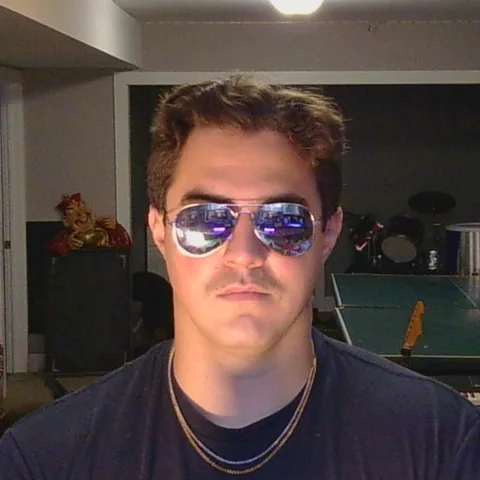
Nic Vandewetering
CEO, founder and builder of CoLateral
Ontario, Canada
I build CoLateral live on YouTube. You can follow the ideas, the fixes and the work that turns an all-in-one agentic workspace into something you can use every day.
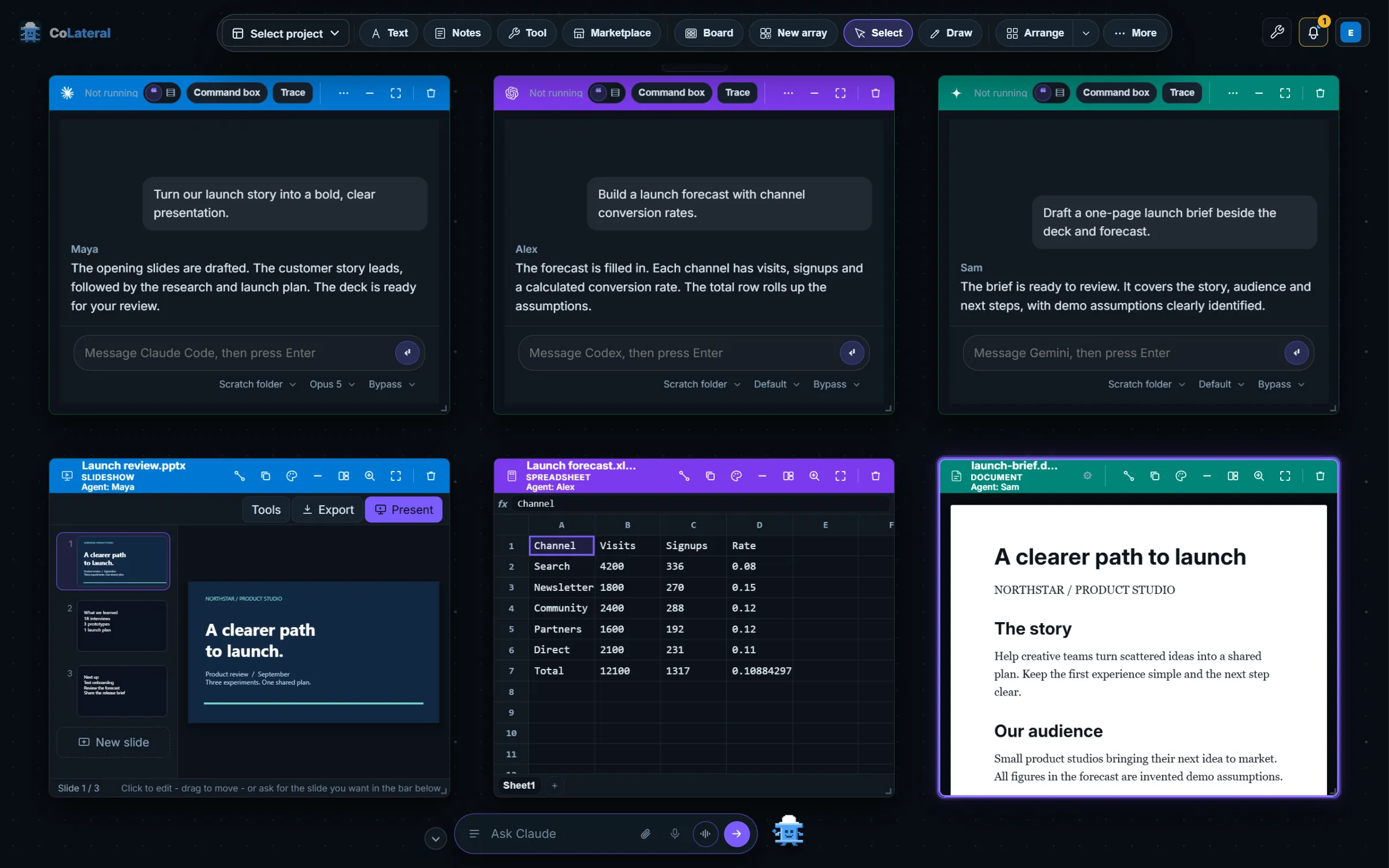
Give your work a place to come together
A project can spread across files, browser tabs, notes and conversations. CoLateral brings those pieces onto one canvas, with your tools and agents beside them.
The goal is practical: less time finding the context, more time making things. Arrange the workspace around what you are doing, then review the work your agents produce.
Explore the workspace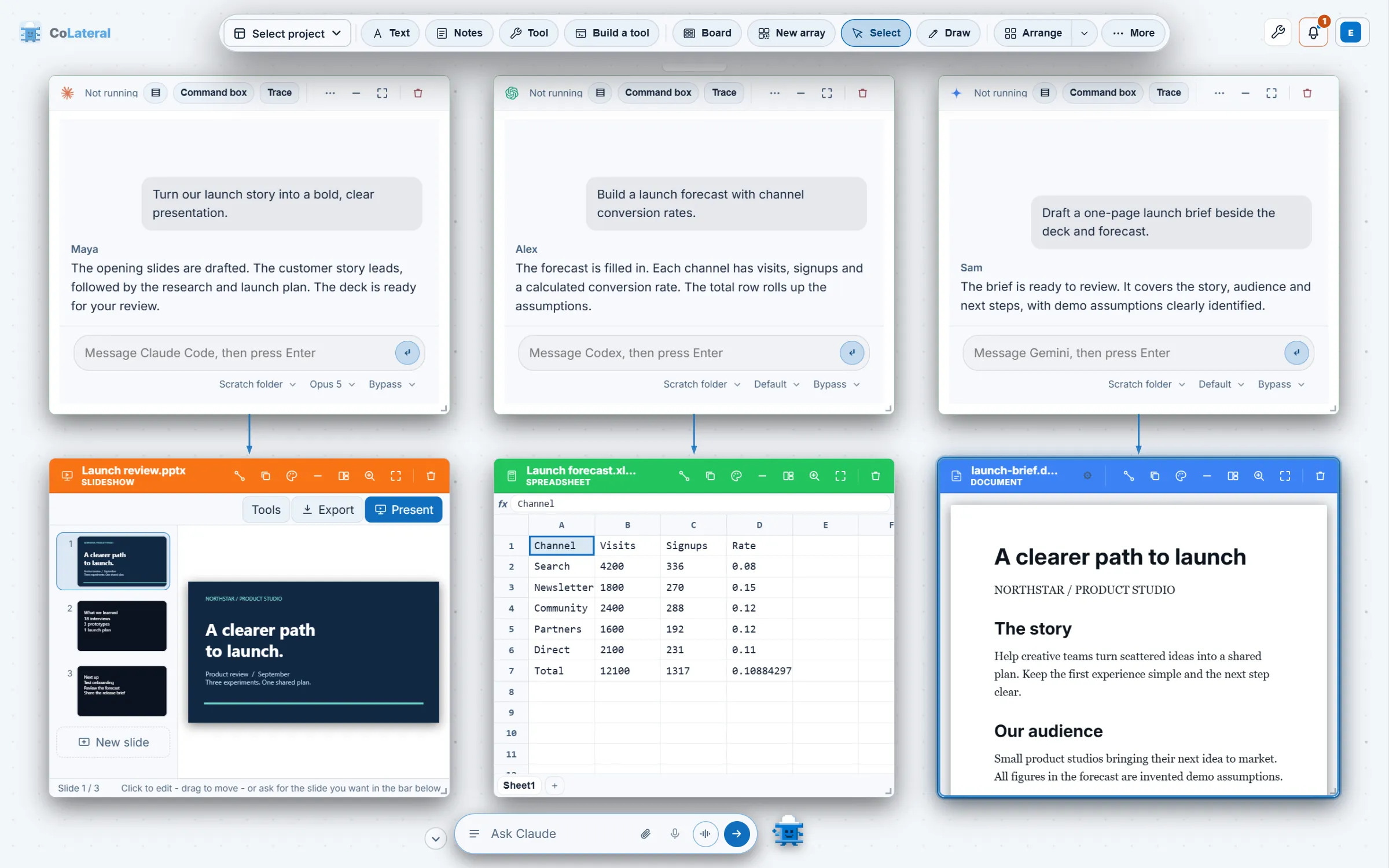
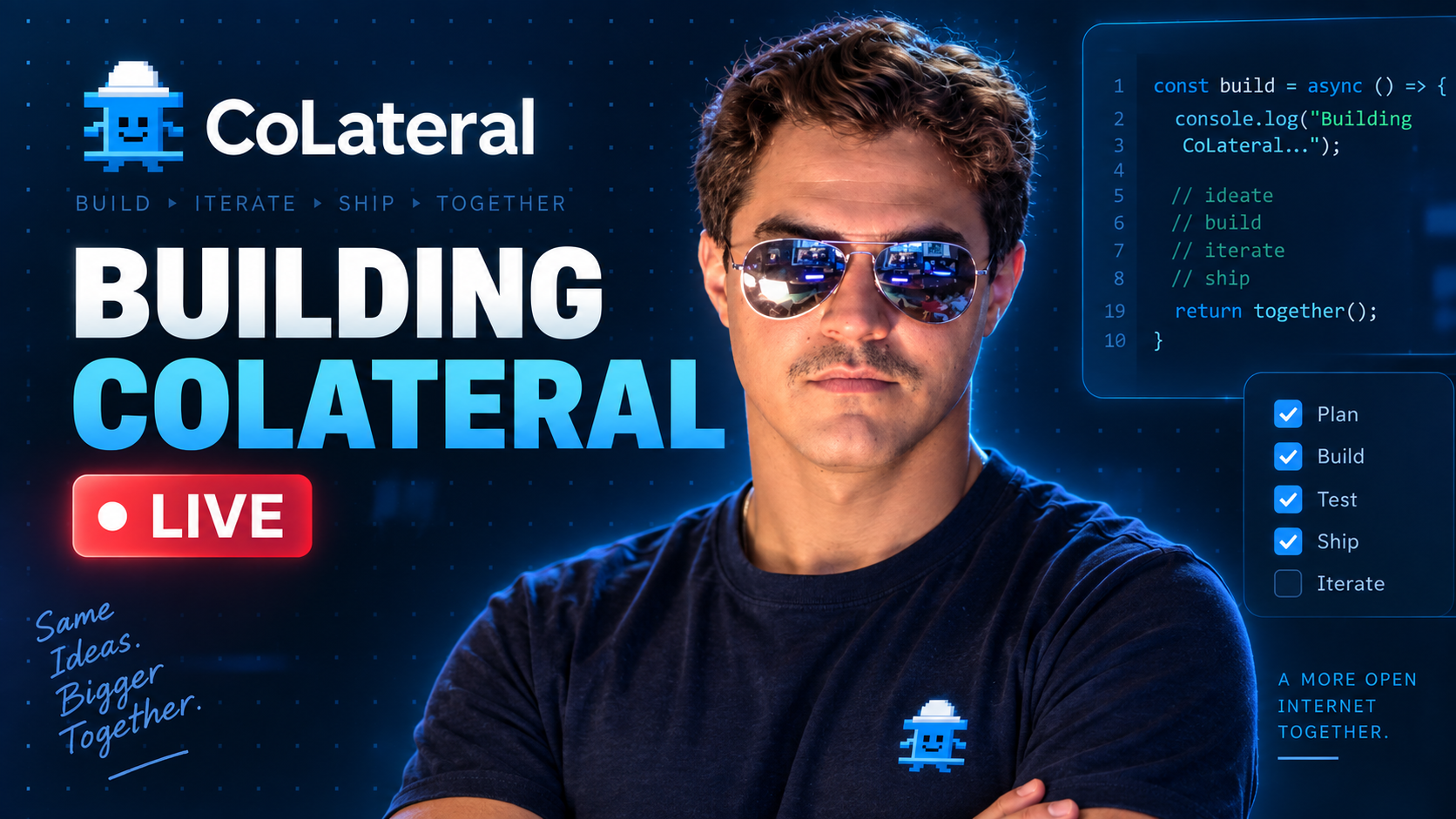
See the work behind the workspace
Follow a build session, see what is being refined and bring your own ideas to the conversation.
 Day 55
Nic Vandewetering, founderNic builds CoLateral - Day 55
Day 54
Nic Vandewetering, founderNic builds CoLateral - Day 54
Live build
Nic Vandewetering, founderNic builds CoLateral live
Day 53
Nic Vandewetering, founderNic builds CoLateral - Day 53
Day 52
Nic Vandewetering, founderNic builds CoLateral - Day 52
Day 51
Nic Vandewetering, founderNic builds CoLateral - Day 51
Day 51
Nic Vandewetering, founderNic builds CoLateral - Day 51
Day 50
Nic Vandewetering, founderNic builds CoLateral - Day 50
Day 55
Nic Vandewetering, founderNic builds CoLateral - Day 55
Day 54
Nic Vandewetering, founderNic builds CoLateral - Day 54
Live build
Nic Vandewetering, founderNic builds CoLateral live
Day 53
Nic Vandewetering, founderNic builds CoLateral - Day 53
Day 52
Nic Vandewetering, founderNic builds CoLateral - Day 52
Day 51
Nic Vandewetering, founderNic builds CoLateral - Day 51
Day 51
Nic Vandewetering, founderNic builds CoLateral - Day 51
Day 50
Nic Vandewetering, founderNic builds CoLateral - Day 50
Build sessions with Nic, founder of CoLateral.
Follow along
Watch the build on YouTube, get support in Discord or follow the updates where you already spend time.
Questions or ideas?
Have a question about CoLateral or an idea for the workspace? Email support@colateral.engineering.
CoLateral is software, not professional engineering services. AI and tool outputs are drafts for you to review; you remain responsible for your final work. Privacy · Terms