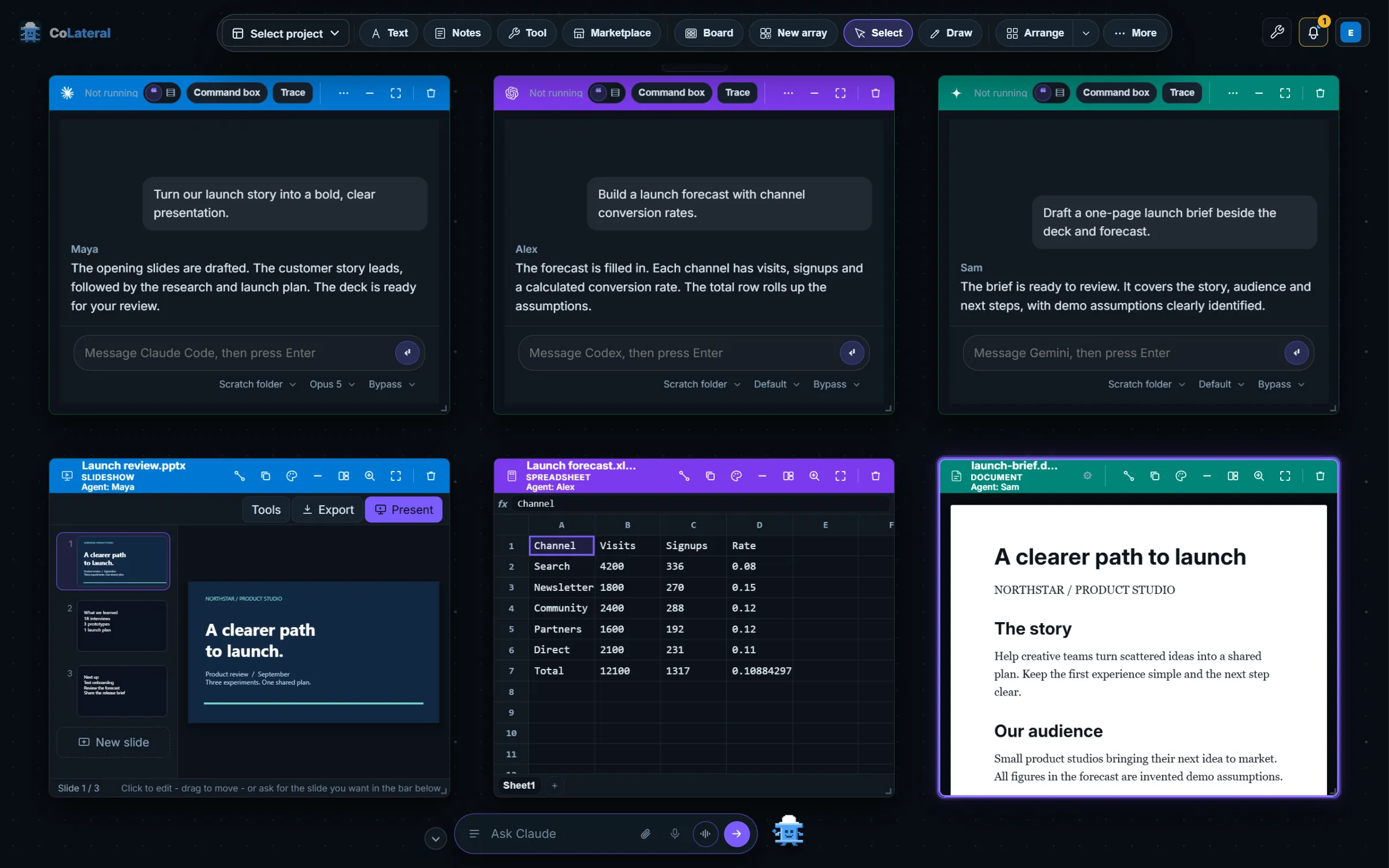
This note explains why I built it that way, how it works without CoLateral handling your login, and what you do and do not pay for.
Key takeaways
- CoLateral supplies no model credits at any price: its agents run on your own Claude Code or Codex CLI login, or your own Anthropic API key, and that usage is billed to you by the provider.
- The CoLateral repository records the constraint behind this: a one-time licence cannot pay for recurring inference, so inference has to run on the engineer's own credential.
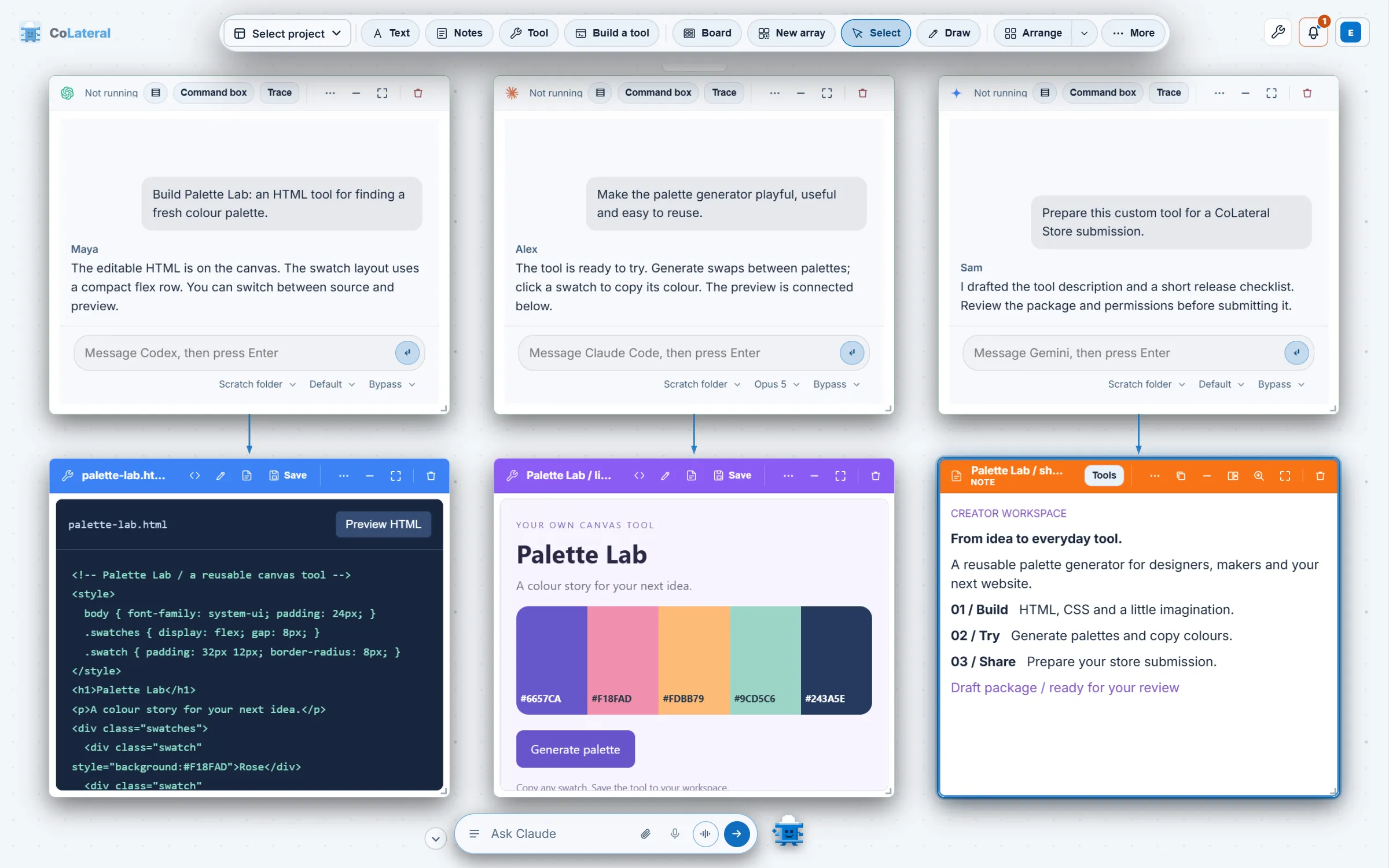
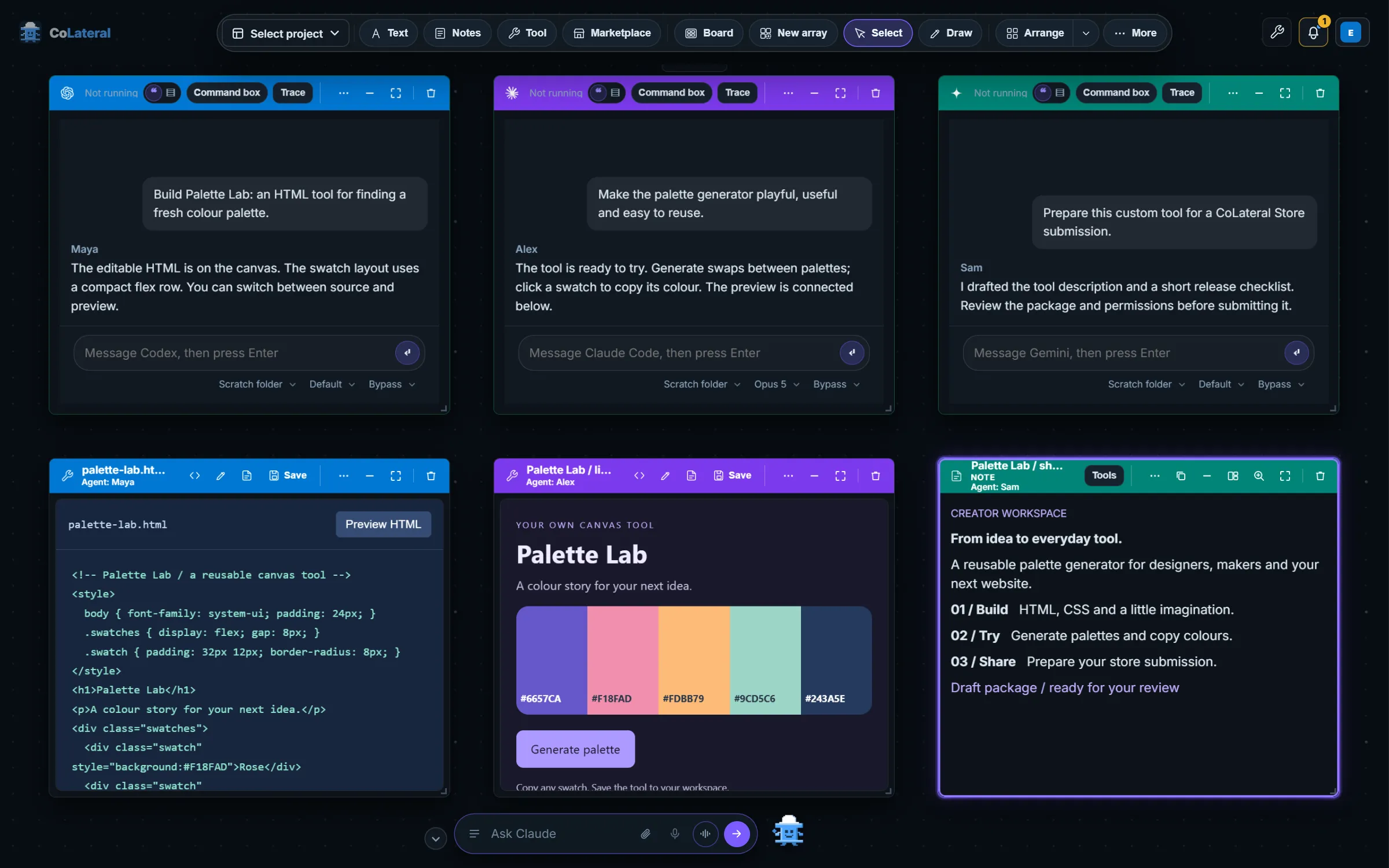
- A CoLateral Terminal Card or agent card starts the provider's own coding agent on your machine, so CoLateral does not embed or resell a provider login.
- Without an AI account the CoLateral canvas, notes, sheets and tools still work; only the agent panel needs one.
- CoLateral can show how much of each subscription your agents have used, and it reads those figures from the provider's own data rather than estimating them.
Why does CoLateral use my own AI account instead of its own credits?
The honest answer is arithmetic. CoLateral is a one-time licence. A single payment cannot fund inference that keeps costing money every time an agent works. On 2026-08-18 the constraint was written into the repository while I weighed a different way of building the agent layer:
a one-time licence cannot pay for recurring inference, so inference must run on the engineer's own credential
There is a second reason that I find just as persuasive. Most people who would use CoLateral already pay for an AI subscription or have a provider login. The pricing page says it plainly: "Agents beside you. Claude Code or Codex on your own login, billed by your provider. CoLateral supplies no model credits." It would be strange to ask you to pay for the same intelligence twice.
Which AI providers does CoLateral work with?
The public pricing page and FAQ name two paths: your own Claude Code or Codex CLI login, or your own Anthropic API key entered in the app. The repository records a wider set of local coding agents that follow the same model. Its account documentation lists separate profiles for Claude Code, Codex, Copilot, Gemini, Grok Build, Cursor, OpenCode and DeepSeek, and the commit history shows several of them arriving as new rows in the same provider tables rather than as special cases.
- On 2026-08-18 a commit titled "Let people run the Grok subscription they already pay for" added Grok Build as a fourth provider.
- The same day, "Let people run the Copilot seat their employer already pays for" added the Copilot CLI as a third. Its message gives the reason: "A lot of working engineers are at firms whose AI policy approves GitHub Copilot and nothing else."
- On 2026-08-19, "Let people run the Cursor subscription they already pay for" added the Cursor terminal agent as a sixth.
The titles repeat one idea on purpose: CoLateral points at the subscription you already pay for. The full list, and how each agent got in, is in AI agents in CoLateral. Check the FAQ and the in-app setup notes for exactly what each connection needs before you rely on it.
How does CoLateral run my agents without handling my login?
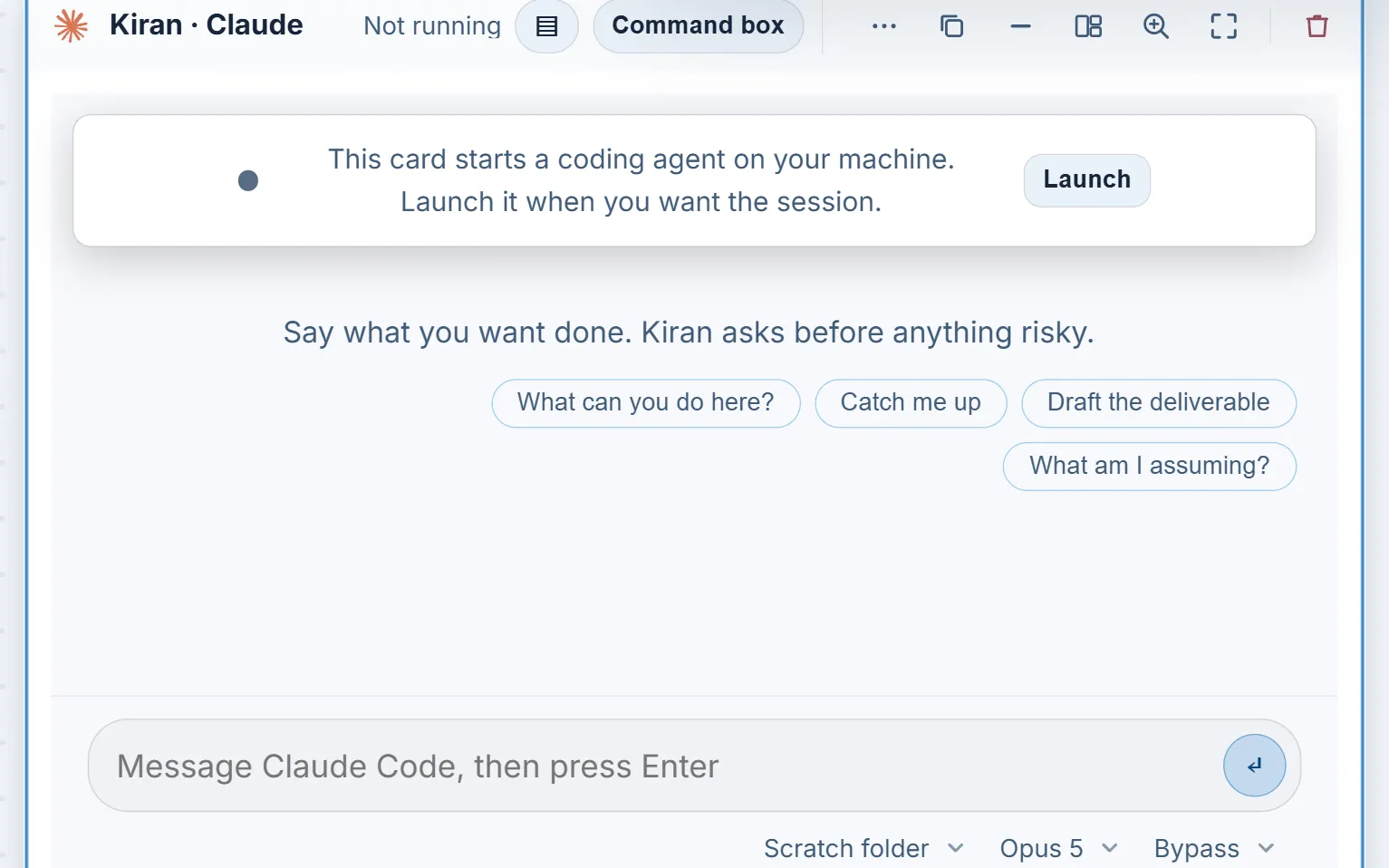
A CoLateral agent card does not call a model itself. It starts the provider's own command-line agent on your computer, through a small local service called the Local Bridge, and shows that session on the canvas. The agent signs in the way it always does, with the provider's own prompts. The repository documents the rules the bridge follows: credentials stay on your machine, nothing about a credential or its folder belongs in canvas metadata or exports, and the bridge does not copy credentials out of your default CLI configuration.
Cloud agents work on the same principle. The repository's cloud-agent notes say the bridge is "a secure local relay: credentials remain local, while prompts and execution go to the provider's hosted agent", and that it does not replace cloud execution with "CoLateral-hosted inference".
The bottom-bar assistant works the same way. On 2026-07-30 a commit titled "Run the bottom bar on your own subscription, not an API key" moved it to your own Claude Code or Codex CLI, run headlessly on whatever account is already signed in, "no API key, no CoLateral spend". The one exception it records is voice: a command-line agent cannot stream speech, so the microphone is the only part that wants a key.
Why not build on the Claude Agent SDK instead?
I looked at it seriously, and the repository keeps the answer. An assessment dated 2026-08-18 asked whether Anthropic's Agent SDK could run on an engineer's existing Claude subscription. Technically it can; it wraps the CLI. The commit that closed the question records the reading of Anthropic's documentation that third-party developers may not offer claude.ai login for their products, Agent SDK agents included, unless previously approved.
That left an API key as the SDK's only permitted credential here, which sends the design straight back to the economics above. The same commit records what survived: asking Anthropic for approval, a bring-your-own-key option as a possible third path, and the typed tool surface CoLateral already exposes to an agent running in your own Claude Code. I did not build an SDK backend. I am reporting the repository's reading of the terms, not giving legal advice, and you should read your provider's current terms yourself.
What do I pay for, and to whom?
| What | Who bills you | How |
|---|---|---|
| The CoLateral workspace (licence) | CoLateral | Once, never renews |
| AI usage by your agents | Your AI provider | Your own subscription, CLI login or API key |
| Optional modules such as CoLateral Marketing | CoLateral | Their own billing cycle, cancellable without touching the licence |
The price of the licence is on pricing. The price of the AI is between you and your provider, and it depends on the plan, limits and any overage your provider applies.
What happens if I do not have an AI account?
The workspace still works. The pricing page says that without a Claude Code or Codex login or an Anthropic API key, "the canvas and the tools still work and the agent panel does not." The FAQ adds that notes, saved canvas content and other local features do not require an AI account. If you want to try CoLateral before connecting an agent, start with a named project and a Notes card, and bring an agent in when you are ready. The download page has the installers.
Can I use more than one AI account in CoLateral?
Yes. The release notes for version 1.0.71, released on 2026-10-06, describe adding multiple Claude Code accounts with separate sign-ins, and say the same selector supports the other compatible local AI providers. A few behaviours from the repository's account documentation are worth knowing:
- Account names are labels you choose. They are never evidence of an authenticated identity or a subscription entitlement.
- Choosing another account changes the next launch. A running agent keeps the account it started with until it is restarted.
- A removed or unavailable profile fails closed, rather than quietly falling back to your computer's default sign-in.
How do I see how much of my subscription my agents are using?
Every agent on the canvas spends an account that CoLateral does not own, and the first sign that a usage window is gone should not be a coding agent refusing halfway through a task. So CoLateral has a slim usage bar in the bottom-left corner of the Project Canvas. The 1.0.61 release notes record that it "names every limit window for each subscription and says what that account meters".
The rule I care about most in its documentation is a short one:
A figure is read, never estimated.
For Claude Code the bar reads the same windows the CLI shows; for Codex it reads rate limits the provider already wrote to disk. Where a provider records nothing, the bar says "n/a" and says why instead of inventing a number. A made-up percentage on a strip you plan your day around is worse than none.
If you want the story of why I build CoLateral in the open, including the decisions above, read building CoLateral in public. The About page links the livestreams and the community.
FAQ
Frequently asked questions
Do I need my own AI subscription or API key to use CoLateral?
To use the agents, yes. CoLateral supplies no model credits, so the agent panel and terminal run on your own Claude Code or Codex CLI login, or your own Anthropic API key, and your provider bills you. The canvas, notes, sheets and local tools work without an AI account.
Why doesn't CoLateral include AI usage in the licence?
A CoLateral licence is paid once, and the repository records that a one-time licence cannot pay for recurring inference. Running agents on your own credential also means you do not pay twice for an AI plan you already have.
Does CoLateral see or store my AI provider login?
CoLateral starts your provider's own coding agent on your machine, and that agent signs in the way it normally does. The repository documents that credentials stay local and that no credential or profile path belongs in canvas metadata or exports.
Can I run Claude Code and Codex at the same time in CoLateral?
Yes, agent cards for different providers can sit side by side on one Project Canvas, each running on its own account. Each provider's limits and billing still apply to its own account.
How do I know how much of my AI plan CoLateral has used?
The usage bar in the corner of the Project Canvas shows the usage windows each supported subscription reports. It reads figures from the provider rather than estimating them, and it shows "n/a" where a provider records nothing.